

generate earned income from scaling
gender equality approaches.
GiE: Scale-by-Demand has a growing network of 5000+ people from 100 organisations working in 75 countries who want to take gender equality approaches to scale.
GiE: Scale-by-Demand is a new way of working for the humanitarian sector where the GiE Group works with organisations to scale their most effective gender equality approaches to other organisations.
We use the power of the market to make this happen. GiE: Scale-by-Demand creates revenue for both partners in the following ways: partner organisations generate funding for their technical teams while the GiE Group makes revenue from the sale of training courses.
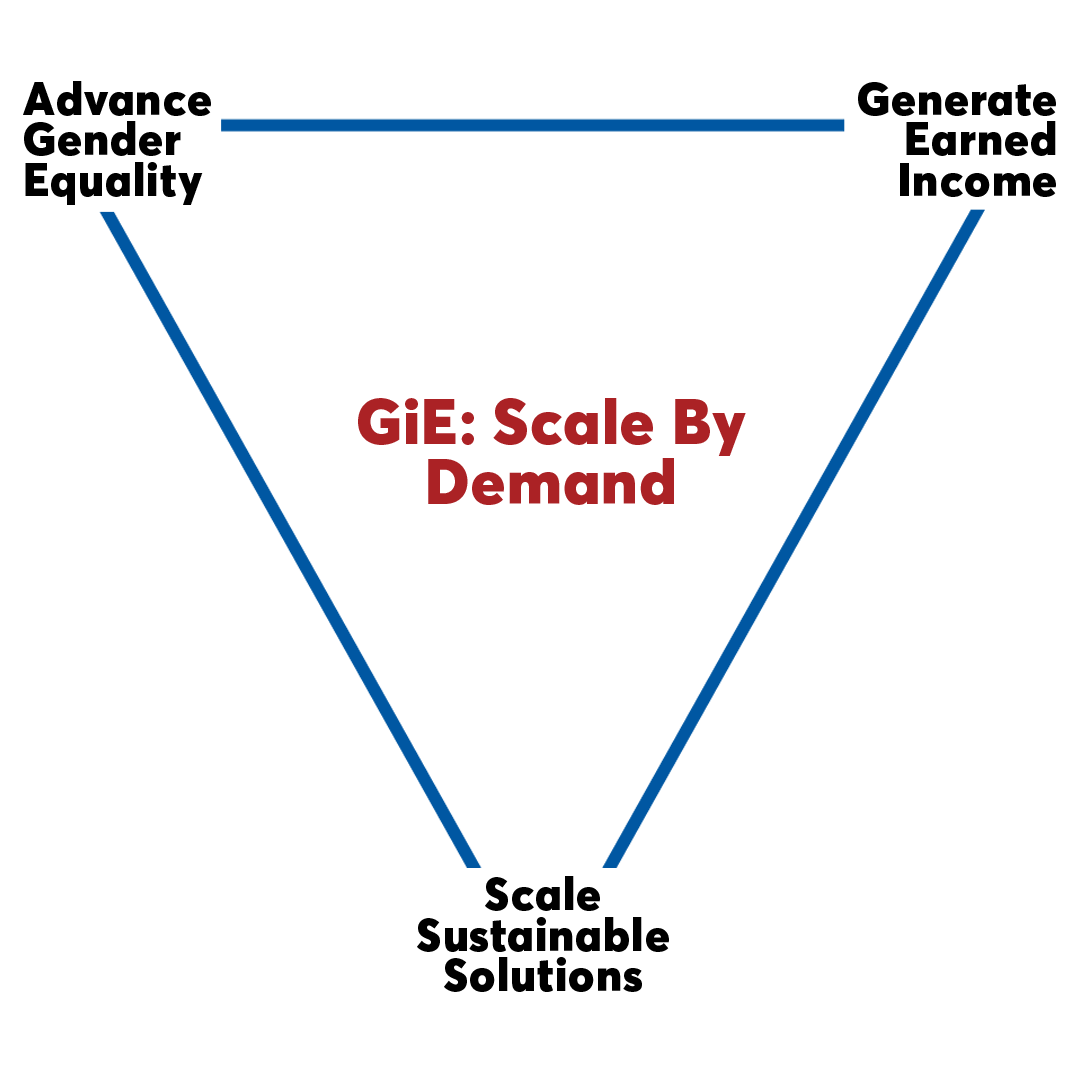
Scale-by-Demand brings together rigorously tested gender equality practice with social enterprise. We partner with organisations to scale gender equality approaches in following ways:



CARE International UK is partnering with the GiE Group to pilot GiE: Scale-by-Demand for their Women Lead in Emergencies programme model.
Women Lead in Emergencies is a highly effective programme approach that increases the participation of women in humanitarian decision-making and community action. It addresses a significant gap by working with and funding unregistered and informal women’s groups.
To learn more about Women Lead in Emergencies visit the project website here.
The Feminist Humanitarian Network partnered with the GiE Group to pilot GiE: Scale-by-Demand for a new training course: Introduction to Partnering with Women’s Rights Organisations. This course generated revenue to cover the cost of course design, course delivery, and the facilitation team without the need for grant funding.
The course was led by course guides from Women’s Rights Organisations: Aluel Atem from South Sudan, Amparo Miciano and Alisandra Lei Escobar from the Philippines, Cecilia Chami from Lebanon, and Sumeera Shrestha from Nepal.
The course brought together 38 practitioners from WROs and Women Led Organisations with INGOs, UN, donors, and WROs. Learners came from 25 organisations and 15 countries to develop individual Partnership Improvement Plans.
To find out about this training see our training page for the latest information.
With the GiE Collective it’s easy to get the best minds on Gender in Emergencies working for you. Simply submit an assignment to GiE Group’s humanitarian surge advisor to bring together a tailored team to meet your needs and a dedicated programme manager to manage the process. The GiE Group quality assurance guarantee ensures high quality, on-time product delivery.
The GiE Braintrust is a simple idea: Put the world’s leading gender in emergencies experts in a room together, task them with identifying and solving the biggest problems on GiE, and encourage them to be candid. Then give their innovations and solutions some ‘legs’ - including them in client proposals and reports, presenting them in conferences and panels, and publishing them in peer newsletters and humanitarian journals. Change happens when the best ideas travel.
Are you an expert on Gender in Emergencies? Please get in touch!
Gender Marker Practitioners Working Group works across the sector with technical experts wherever they sit from local to global from NGOs to donors. The GiE Group co-chairs this group along with the International Organisation of Migration and PLAN International.
Subscribe Now